Pregnancy is a beautiful phase of life, but it also brings many changes—especially to your skin. Hormonal fluctuations can lead to acne, pigmentation, dryness, itching, stretch marks, and increased skin sensitivity. While many women want to maintain healthy, glowing skin during pregnancy, safety must always come first.
Not all skincare products or treatments are suitable during pregnancy. This is why expert guidance is essential before trying anything new. In this blog, we explain pregnancy-safe skin concerns, treatments that are considered safe, what to avoid, and when to consult a dermatologist in Pune for personalized care.
Why Skin Changes Occur During Pregnancy
Pregnancy hormones such as estrogen and progesterone affect oil production, melanin levels, and skin hydration. As a result, many women experience:
- Acne or breakouts
- Melasma (dark patches on the face)
- Dry, itchy, or sensitive skin
- Stretch marks
- Darkening of nipples, underarms, and inner thighs
These changes are normal and usually temporary, but proper care can help manage them safely.
Common Pregnancy Skin Concerns & Safe Solutions
1. Pregnancy Acne
Hormonal acne is common, especially in the first and second trimesters.
Safe options include:
- Gentle, soap-free cleansers
- Azelaic acid (in low concentrations)
- Topical niacinamide
- Light moisturisers labeled pregnancy-safe
Avoid self-medication, as many acne products contain ingredients unsafe for pregnancy.
2. Pigmentation & Melasma
Melasma, often called the “mask of pregnancy,” causes brown or greyish patches on the face.
Safe management includes:
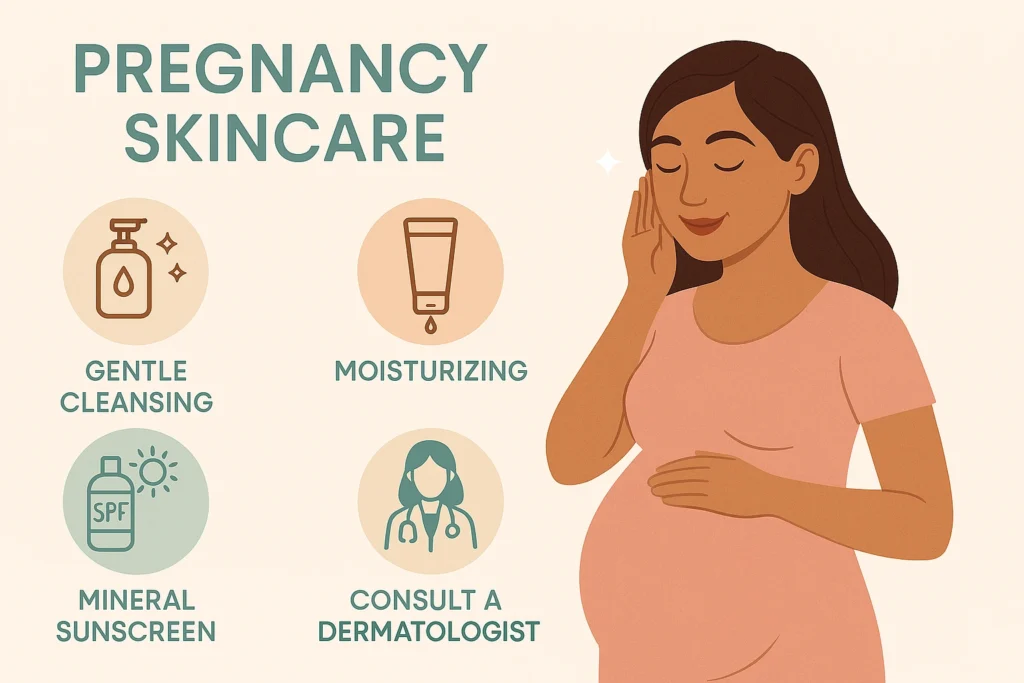
- Broad-spectrum mineral sunscreen (zinc oxide or titanium dioxide)
- Vitamin C serums (mild formulations)
- Gentle exfoliation recommended by a skin specialist
Pigmentation often fades after delivery, but proper sun protection is crucial.
3. Dry & Itchy Skin
As the skin stretches and hormones shift, dryness and itching can worsen.
Pregnancy-safe care includes:
- Ceramide-based moisturisers
- Shea butter or cocoa butter
- Oatmeal-based body washes
Hydration from within also plays an important role.
4. Stretch Marks
Stretch marks develop due to rapid stretching of the skin.
What helps:
- Regular moisturising
- Products with vitamin E, almond oil, or hyaluronic acid
- Gentle massage to improve skin elasticity
While no treatment can completely prevent stretch marks, early care can reduce their severity.
Pregnancy-Safe Skin Treatments
Many women worry that all skin treatments are unsafe during pregnancy. The truth is—some treatments can be done safely under medical supervision.
Treatments Generally Considered Safe
- Medical facials using pregnancy-safe products
- Mild chemical peels (like lactic acid, if approved by your doctor)
- Hydrating skin treatments
- LED light therapy (in selected cases)
A qualified Dermatologist in Pune can customize treatments based on trimester, skin type, and medical history.
Skin Treatments to Avoid During Pregnancy
Certain ingredients and procedures should be strictly avoided:
- Retinoids (Retinol, Tretinoin, Isotretinoin)
- High-strength salicylic acid
- Hydroquinone
- Laser treatments (unless specifically approved)
- Botox and dermal fillers
- Oral acne medications
Using these without guidance may pose risks to both mother and baby.
Importance of Consulting a Skin Specialist During Pregnancy
Every pregnancy is different, and what works for one person may not be safe for another. Consulting a Dermatologist in Pune ensures:
- Accurate diagnosis of skin conditions
- Safe treatment selection
- Trimester-specific skincare planning
- Avoidance of harmful ingredients
Professional guidance helps you maintain healthy skin without compromising safety.
Daily Pregnancy-Safe Skincare Routine
A simple routine can make a big difference:
Morning
- Gentle cleanser
- Pregnancy-safe moisturiser
- Mineral sunscreen
Night
- Mild cleanser
- Hydrating serum (approved by doctor)
- Nourishing moisturiser
Avoid experimenting with multiple products at once.
When Should You See a Dermatologist?
You should consult a skin specialist if you experience:
- Severe acne or sudden rashes
- Intense itching or skin infections
- Rapidly worsening pigmentation
- Allergic reactions to skincare products
Early intervention prevents complications and ensures peace of mind.
Final Thoughts
Pregnancy is not the time for aggressive skin treatments or self-experimentation. With the right care, patience, and expert advice, you can manage skin changes safely and effectively. Always choose medically approved solutions and seek professional guidance before starting any treatment.
If you are unsure about a product or procedure, consulting a trusted Dermatologist in Pune can help you make informed, safe decisions for both you and your baby.
FAQs
- Are skin treatments safe during pregnancy?
Yes, some skin treatments are safe during pregnancy when done under medical supervision. Mild facials, hydration therapies, and pregnancy-approved products can be safely used after consulting a dermatologist.
- Can I treat acne during pregnancy?
Pregnancy acne can be treated safely using gentle cleansers, azelaic acid, and pregnancy-safe topical products. Avoid retinoids and oral acne medicines without medical advice.
- Is pigmentation or melasma permanent after pregnancy?
In most cases, pregnancy-related pigmentation fades gradually after delivery. Proper sun protection and dermatologist-recommended skincare can help manage it effectively.
- Are chemical peels allowed during pregnancy?
Only very mild chemical peels, such as lactic acid peels, may be considered safe in selected cases. Strong peels and active ingredients should be avoided unless approved by a dermatologist.
- Which skincare ingredients should be avoided during pregnancy?
Ingredients like retinol, isotretinoin, hydroquinone, high-strength salicylic acid, and certain essential oils should be avoided during pregnancy.
- Can stretch marks be prevented during pregnancy?
Stretch marks cannot be completely prevented, but regular moisturising, hydration, and maintaining skin elasticity can help reduce their appearance.
- Is sunscreen safe to use during pregnancy?
Yes, mineral sunscreens containing zinc oxide or titanium dioxide are considered safe and are highly recommended to prevent pigmentation.
- When should I consult a dermatologist during pregnancy?
You should consult a dermatologist if you experience severe acne, rashes, infections, excessive itching, or sudden skin changes during pregnancy.