Moisturizers are the backbone of every skincare routine. Whether you have oily, dry, or combination skin, hydration is essential for barrier repair, collagen production, and overall glow. Yet, many people don’t see any difference even after applying moisturizers daily. This raises a common question: Is your moisturizer really working?
With India’s unique climate—hot summers, high humidity, dry winters, pollution, and frequent weather changes—choosing a suitable moisturizer becomes even more important. A product meant for one season may not work for another. In this detailed guide, we break down how to identify whether your moisturizer is effective and how to choose the right one based on Indian weather conditions.
If you still feel confused about selecting the right product, consulting a dermatologist in chinchwad can help you understand your skin’s needs better.
Why Moisturizing Matters More in Indian Weather
India’s climate varies from humid coastal regions to dry northern zones. These fluctuations have a direct impact on the skin.
1. Heat and Humidity
- Makes skin oily and sweaty
- Leads to clogged pores
- Requires lightweight, non-greasy formulas
2. Dry Winters
- Causes dehydration
- Leads to flaky skin
- Needs richer, nourishing creams and balms
3. Pollution
- Damages skin barrier
- Accelerates aging
- Needs antioxidants + hydration
4. Unpredictable Weather
Sudden temperature changes strip the skin of moisture, leading to dehydration even in oily skin types.
This is why a single moisturizer may not work throughout the year.
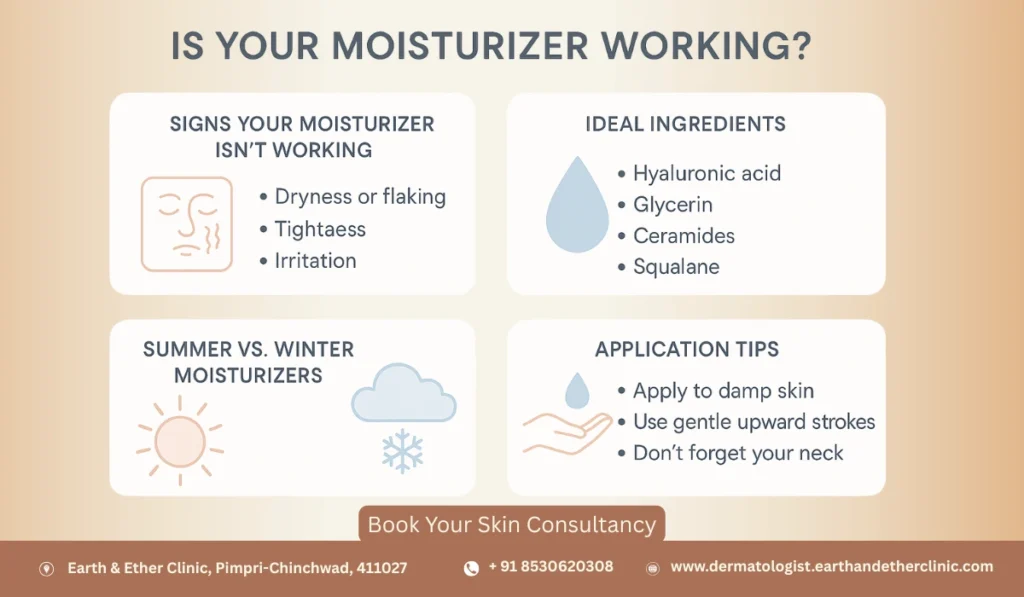
Is Your Moisturizer Working? 10 Signs to Check
- Your Skin Still Feels Tight After Applying
A tight or stretchy sensation indicates the moisturizer isn’t hydrating enough.
- Skin Looks Dull or Rough
When the barrier is not nourished, hydration does not stay locked inside.
- Increased Oiliness
Yes, too little moisture can make oily skin produce more oil to compensate.
- Makeup Looks Patchy
Dehydrated skin causes the foundation to crack or cling to dry patches.
- Burning or Stinging Sensation
Indicates possible alcohol, fragrance, or harsh activities unsuitable for your skin.
- Breakouts or Whiteheads
Often caused by comedogenic ingredients like:
- Coconut oil
- Shea butter (for oily skin)
- Mineral oil
- Lanolin
- Flaking or Peeling
Shows the moisturizer lacks occlusives that seal in hydration.
- Redness or Sensitivity
Fragrances, essential oils, heavy preservatives, or alcohol can irritate skin.
- Excessive Shine
If your moisturizer leaves a greasy film, it is too heavy for humid weather.
- No Improvement Over Weeks
A good moisturizer should show results within 2–3 weeks.
If you relate to any of these signs, it may be time to switch.
How to Choose the Right Moisturizer for Indian Weather
Here’s a season-wise and skin-type–wise guide.
1. Choose Based on Your Skin Type
A. For Oily Skin
Opt for:
- Gel-based moisturizers
- Water-based creams
- Oil-free formulas
- Non-comedogenic ingredients
Ingredients to look for:
- Hyaluronic Acid
- Niacinamide
- Glycerin
- Green tea extract
- Squalane (lightweight)
Avoid:
Coconut oil, cocoa butter, thick creams, petroleum jelly
B. For Dry Skin
Your skin needs barrier repair + intense hydration.
Choose:
- Cream-based moisturizers
- Ceramide-rich formulas
- Moisturizers with occlusives
Ingredients to look for:
- Ceramides
- Shea butter
- Hyaluronic acid
- Squalane
- Fatty acids
- Panthenol
C. For Combination Skin
Use:
- Light gel for T-zone
- Cream for dry areas
Or
- One balanced moisturizer with humectants + emollients
Best ingredients:
- Niacinamide
- Peptides
- Aloe vera
- Hyaluronic acid
D. For Sensitive Skin
Choose the simplest formula possible:
- Fragrance-free
- Alcohol-free
- Hypoallergenic
- Dermatologically tested
Best ingredients:
- Ceramides
- Centella Asiatica
- Panthenol
- Colloidal oatmeal
A quick consultation with a dermatologist in chinchwad can help identify triggers and select safe products for sensitive skin.
2. Choose Based on Weather and Season
Summer (Hot + Humid)
The skin sweats more and retains less moisture.
Choose:
- Gel moisturizers
- Water-based formulas
- Non-greasy textures
Avoid:
- Thick creams
- Butters
- Oils
Recommended Ingredients:
- Aloe vera
- Green tea
- Hyaluronic acid
- Niacinamide
Monsoon (Sticky + Oily)
Humidity can cause breakouts.
Choose:
- Oil-free moisturizers
- Non-comedogenic gels
Avoid:
- Heavy products that clog pores
Winter (Cold + Dry)
Moisture loss increases by 25%.
Choose:
- Cream-based moisturizers
- Hydrating balms
- Ceramide-rich formulas
Ingredients:
- Ceramides
- Shea butter
- Hyaluronic acid
- Panthenol
- Squalane
Transition Seasons (Spring & Autumn)
Weather shifts can confuse the skin.
Choose:
- Balanced moisturizer
- Lightweight cream
3. Check the Ingredients: What Really Matters?
A good moisturizer contains a combination of:
1. Humectants (Hydration Attractors)
They pull water into the skin.
Examples:
- Hyaluronic acid
- Glycerin
- Urea
- Lactic acid (mild)
2. Emollients (Skin Softening Agents)
They fill cracks and smooth the skin.
Examples:
- Squalane
- Fatty acids
- Ceramides
3. Occlusives (Seal the Moisture)
They prevent water loss.
Examples:
- Petrolatum
- Beeswax
- Dimethicone
The best moisturizer has a balanced mix of all three.
4. Avoid These Ingredients in Indian Weather
- High alcohol concentrations
- Strong fragrances
- Essential oils (lemon, lavender, eucalyptus)
- Thick butters in summer
- Mineral oil for oily skin
How to Apply Moisturizer Correctly
Even the best product won’t work if you don’t apply it the right way.
Step 1: Cleanse
Use a gentle, pH-balanced cleanser.
Step 2: Apply Moisturizer on Damp Skin
Helps lock in more hydration.
Step 3: Layer Wisely
Serum → Moisturizer → Sunscreen (morning)
Step 4: Night Routine
Use a richer moisturizer at night for repair.
Moisturizer Recommendations Based on Skin Concerns
For Acne-Prone Skin
- Lightweight gel moisturizers with niacinamide
- Oil-free formulations
- Avoid comedogenic products
For Aging Skin
- Moisturizers with peptides, ceramides, hyaluronic acid
For Pigmentation
- Add niacinamide or vitamin B5 serum underneath
For Extremely Dry Skin
- Ceramide-rich cream
- Apply twice daily
For advanced concerns, the best skin doctor in Pimpri chinchwad can help personalize a treatment plan based on your skin type.
Frequently Asked Questions
- Do oily skin types even need moisturizer?
Yes! Without hydration, your skin produces MORE oil, causing acne.
- How do I know if a moisturizer is non-comedogenic?
Look for labels like:
- “Oil-free”
- “Won’t clog pores”
- “Non-comedogenic”
- Should moisturizer change with seasons in India?
Absolutely. Summers need gel formulas; winters need rich creams.
- Can the wrong moisturizer cause acne?
Yes. Heavy, comedogenic ingredients often lead to clogged pores.
- How long should I test a moisturizer?
At least 2–3 weeks before deciding if it works.
Final Thoughts
Your skin’s needs change with weather, environment, and lifestyle—so your moisturizer must adapt accordingly. The right formulation will keep your skin hydrated, balanced, and glowing throughout the year.
If you’re struggling with dryness, acne, or sensitivity, consult a skincare expert who can guide you with the best options suited for Indian weather and your skin type.